
Albany Snow Prep: Handyman Services Near Me Guide
Winter in Albany and across Upstate NY doesn’t ask for permission—it shows up fast and hits hard. If your snow blower coughs on the first pull, your ice melt is rock-solid in the garage, or your hand tools are bent from last year’s bigger storms, you’re already behind. A winter-ready snow plan starts now—before the first flurries—so your driveway, walks, and stairs stay safe and accessible all season.
This guide brings together tune-up steps, eco-safe de-icing strategies, and a practical schedule to help you prevent emergencies, protect your property value, and keep costs low. You’ll also get insights from Vasiliy—owner of Local Handyman Repair—on what Albany homeowners often overlook and how to fix it fast. If you’re already searching for handyman services near me, you’ll find a clear checklist of when to DIY and when to bring in a pro.
Why Snow Removal Prep Matters for Albany Homes
1) Safety: Prevent slips and liability
Even a thin layer of packed snow can turn stairs and walks into skating rinks. A well-tuned snow blower, sturdy shovel, and timely ice-melt plan reduce fall risks for family, guests, and delivery drivers. For rental properties or multifamily homes, consistent snow and ice management can also reduce liability exposure.
2) Accessibility: Keep your daily life moving
From school drop-offs to grocery runs, a clear driveway and walkways save time and stress. Albany weather often swings from wet snow to deep freeze overnight. If you miss the ideal clearing window or your equipment stalls, you’ll be chiseling ice by morning.
3) Avoid costly repairs to concrete, landscaping, and equipment
Improper ice melt, dull augers, and neglected spreaders can damage concrete, kill grass, or shorten equipment lifespan. A tuned machine with fresh belts and properly inflated tires does the job faster with less strain, while right-choice de-icer prevents spalling on concrete and staining on pavers.
Albany/Upstate NY trend snapshot
- Freeze-thaw cycles: Expect repeated melting and refreezing in shoulder months—prime conditions for black ice and concrete cracks.
- Mixed precipitation: Rain-to-snow events often create heavy, wet accumulation that is hard on underpowered blowers and low-quality shovels.
- Early first freeze risk: Plan to prep gear before Halloween and stock de-icers by mid-fall to beat shortages.
Common Winter Prep Myths Debunked
Myth 1: “Factory settings are fine—no tune-up needed.”
Reality: Fuel lines gum up, carburetors get sticky, and belts stretch—even in storage. A pre-season tune-up prevents no-start mornings when the first storm hits.
Myth 2: “One bag of salt will last all winter.”
Reality: Albany winters are unpredictable. A single bag disappears fast during back-to-back systems, and stockouts happen at peak demand. Keep staged reserves in sealed containers.
Myth 3: “Salt works at any temperature.”
Reality: Standard rock salt (sodium chloride) loses effectiveness around 15°F (-9°C). Below that, you’ll need a blended product (calcium chloride, magnesium chloride) or different application tactics.
Myth 4: “Shoveling is one-and-done.”
Reality: Clearing in layers during the storm prevents compaction and ice formation. A single shovel pass after 8–12 inches will exhaust you and leave packed ice bonded to concrete.
Myth 5: “More ice melt = faster melting.”
Reality: Over-application wastes money, damages concrete/landscaping, and can increase runoff. Proper spread patterns and rates matter more than volume.
Key Equipment to Inspect Before Snow Season
Run through this checklist before first snow. A 45–60 minute tune-up now saves hours mid-storm.
Hand Tools: Shovels, Pushers, Ice Choppers
- Shovel blade: Check for cracks, bends, or split edges. Replace if warped or if lips are jagged.
- Handles/grips: Tighten screws and replace worn grips to prevent blisters and wrist strain.
- Ergonomics: Consider a lightweight, curved-shaft shovel to reduce lower-back fatigue.
- Ice choppers: Sharpen blades slightly and store away from concrete to keep edges true.
Snow Blower: Single-, Two-, and Three-Stage Units
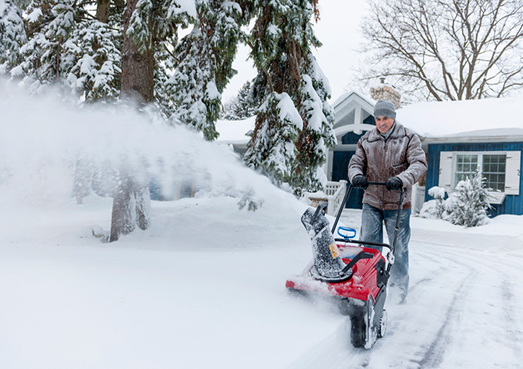
Whether you own a compact single-stage for smaller drives or a two/three-stage for heavy snowfall, prioritize starting reliability and safe operation.
| Component | What to Check | Action |
|---|---|---|
| Fuel System | Old fuel, varnish odor, clogged filter | Drain tank, replace with fresh fuel; add stabilizer; replace filter as needed |
| Spark Plug | Corrosion, carbon buildup | Clean or replace plug; set correct gap per manufacturer |
| Belts & Auger | Frays, cracks, looseness; auger paddles worn | Replace belts; adjust tension; replace paddles/scraper bar if worn |
| Shear Pins | Missing or soft metal worn down | Install new shear pins; keep spares taped to handle |
| Skid Shoes | Uneven wear, grinding marks | Flip/replace skid shoes; adjust clearance to protect driveway |
| Tires/Tracks | Low pressure, poor traction | Inflate to spec; add chains or switch to tracks for steep drives |
| Chute & Impeller | Binding, rust, slow rotation | Lubricate linkage; check impeller housing for obstructions |
| Controls & Cables | Slack, sticking levers | Lubricate cables; adjust clutch/drive engagement |
| Lights & Battery (if electric start) | Dim bulbs, weak battery | Charge/replace battery; check headlight function |
Spreaders: Handheld and Walk-Behind
- Hopper: Clean out caked residue; check for cracks.
- Gate control: Ensure smooth open/close; calibrate application rate.
- Wheels and gears: Lubricate to prevent seizures in freezing temps.
- Test with sand or kitty litter before loading de-icer.
Ice-Melt Strategies for Driveways, Walkways, and Stairs
Choose the right product for the temperature
- Sodium chloride (rock salt): Budget-friendly, works down to ~15°F. Best for milder temps and pre-treating before light snow.
- Calcium chloride: Fast-acting, effective below 0°F; exothermic reaction helps penetrate ice. Handle with gloves.
- Magnesium chloride: Gentler on concrete and plants; suitable for very cold temps; slightly slower than calcium chloride.
- Potassium chloride: Plant-friendlier but slower; often used in blends.
- Acetates (CMA/PMA): Lower corrosion, premium cost; good for decorative stone, metal steps, and sensitive landscaping.
Protect your concrete and pavers
- Sealed surfaces: Apply a breathable, penetrating sealer to driveways and steps in fall to resist salt intrusion and freeze-thaw damage.
- Use sand with de-icer: On older or spalled concrete, mix in sand for traction to reduce chemical load.
- Avoid overuse: Sweep up residual pellets after melt to prevent staining and plant damage.
Application best practices
- Pre-treat: Spread a light application before storms to prevent bonding.
- Layered approach: Clear snow first; then apply de-icer; then re-clear slush; finish with a light reapplication if temps are dropping.
- Focus high-traffic zones: Prioritize stairs, porch landings, mailbox paths, and curb cuts.
- Staging: Keep small shaker bottles near entries for quick touch-ups and a sealed bin by the garage for bulk applications.
Eco-safe and pet-friendly habits
- Choose chloride blends labeled as pet-safe, and rinse pet paws after walks.
- Store de-icer off the floor in sealed containers to prevent moisture clumping and runoff.
- Use a hand broom to remove excess pellets from lawns and beds once ice is gone.
When “Handyman Services Near Me” Make the Most Sense for Winter Prep
DIY is great—until your blower won’t start, the chute sticks at the worst moment, or your front steps are spalling and need repair before the first freeze. Here’s when calling a local pro saves money and headaches:
- Equipment won’t start or surges under load: Likely carburetor/fuel issues or belt tensioning—and a quick diagnostic saves hours.
- Driveway settling or cracked steps: Tripping hazards worsen with freeze-thaw; repair before icing makes them dangerous.
- Drainage and slope issues: Water pooling becomes black ice overnight; adjust grading or install channel drains before winter.
- Heavy snow property layout: For long drives, steep slopes, or walkways with many stairs, a tune-up plus strategy session optimizes your gear and workflow.
- Accessibility and senior support: Reliable, scheduled clearing and de-icing reduces risk for older adults and guests.
If you’ve been comparing options and searching for handyman services near me, consider a pre-season visit to fix small issues—before they become emergency calls in a snowstorm.
Seasonal Repair Reminders
Winter prep isn’t just about snow; it’s also about the small home repairs that prevent bigger problems under stress. Doors swell, thresholds gap, and heat loss creates icicles and ice dams.
- Weatherstripping and thresholds: Reduce drafts to keep entryways dry; less condensation means less ice on steps.
- Gutter cleaning and extensions: Keep meltwater flowing away from walks and driveways to prevent overnight ice sheets.
- Exterior lighting and motion sensors: Good lighting reduces slips and helps you spot refreeze areas after sundown.
- Handrails: Tighten or add rails to stairs for safer footing in slick conditions.
For a deeper dive on why tackling small fixes now saves money, read: Why You Can’t Ignore Small Home Repairs and the Top 10 Home Repairs in Albany NY. Both are excellent checklists to pair with your winterization plan.
Vasiliy’s Winter Prep Approach — Affordable, Proactive, Reliable for Albany Homes
Vasiliy has helped hundreds of homeowners across Albany prep for winter by focusing on three pillars:
1) Affordability through prevention
- Budget-first tune-ups: Replace only what’s needed—belts, spark plugs, skid shoes—and clean/adjust everything else.
- Right-sized solutions: Recommend upgrades only when your driveway length, slope, or snow volume justify it.
2) Proactive maintenance schedules
- Pre-season visit: Fuel system prep, blade/paddle checks, belt tensioning, and de-icer strategy review.
- Mid-season check-in: Quick adjustments after heavy storms to keep machines running strong.
3) Reliability and responsiveness
- Local knowledge: Understanding Albany’s freeze-thaw patterns, plow routes, and supply availability.
- Emergency-ready: Fast support when equipment fails mid-storm or ice creates a safety issue.
This balanced approach keeps costs predictable and safety high—even in long, stormy winters.
Key Equipment Checklist You Can Print
| Item | Check | Pass/Fail | Notes |
|---|---|---|---|
| Primary shovel | Blade straight, screws tight, grip secure | ___ | ____________________________ |
| Secondary shovel/pusher | Lightweight backup ready | ___ | ____________________________ |
| Ice chopper | Edge even, handle solid | ___ | ____________________________ |
| Snow blower | Fresh fuel, belts tight, spare shear pins | ___ | ____________________________ |
| Spreader | Gate operates smoothly; calibration set | ___ | ____________________________ |
| De-icer supply | Two types on hand (rock salt + cold-weather) | ___ | ____________________________ |
| Protective gear | Gloves, traction cleats, goggles | ___ | ____________________________ |
| Lighting | Entry and driveway lights functional | ___ | ____________________________ |
Step-by-Step Winterization Plan
Use this timeline to get ahead of the first storm.
| Timeframe | Task | Why It Matters |
|---|---|---|
| Late September | Inventory tools and de-icers; order early | Beat shortages and price spikes |
| Early October | Snow blower tune-up: fuel, belts, plug, shear pins | Ensures first-pull starts and power under load |
| Mid October | Seal concrete/pavers; tighten handrails; service lights | Protects surfaces; improves night safety |
| Late October | Stage de-icer in sealed bins; calibrate spreader | Fast access; accurate application rates |
| Before First Storm | Pre-treat priority paths; test blower on dry run | Prevents bonding; confirms readiness |
| During Storm | Clear in layers; reapply de-icer as temps drop | Reduces labor; prevents ice compaction |
| After Storm | Sweep excess pellets; inspect for refreeze zones | Protects landscaping; targets black ice |
| Mid-Season | Quick re-check: belts, skids, paddles, fuel | Keeps equipment strong through late-season storms |
How to Store and Stage Your Winter Gear
- Wall hooks for shovels: Keep blades off the floor to prevent warping and edge damage.
- Sealed totes for de-icer: Label by temperature range; store off concrete to reduce moisture absorption.
- “Storm station” near the garage door: Gloves, traction cleats, headlamp, and a small hand spreader for fast deployment.
- Outdoor bin with scoop near front steps: Saves trips during icy mornings.
“What If” Scenarios and Quick Fixes
Snow blower won’t start
- Check fuel shutoff valve and choke settings.
- Replace spark plug; add fresh, stabilized fuel.
- Carburetor cleaning often solves surging/no-start issues.
Chute clogs constantly
- Wet snow demands slower pace; use non-stick spray on chute.
- Check impeller speed and belt tension; dull paddles reduce throw.
Driveway ices overnight after clearing
- Pre-treat before snow; after clearing, apply a light layer of cold-temp de-icer.
- Improve drainage: extend downspouts; adjust slope away from drive/walks.
Concrete spalling or paver shifting
- Use gentler de-icer blends; reduce application rate.
- Short-term: sand for traction; long-term: repair or reset pavers when weather allows.
FAQs
1) How do I know which de-icer is safe for my driveway?
Check your surface type first. Standard, newer concrete can handle rock salt in moderate temps, but for very cold weather or decorative pavers/stone, use magnesium/calcium chloride or acetate blends. When in doubt, test a small area and avoid over-application.
2) When should I replace my snow blower belts and paddles?
Replace belts if you see cracks, fraying, or slippage under load. Replace paddles or scraper bars when the wear indicator (often a molded line or rivet proximity) is reached or if clearing performance drops.
3) What’s the best way to prevent black ice on steps?
Pre-treat before storms, clear snow early, then apply a cold-weather de-icer with a light reapplication before evening if temps are dropping. Ensure good lighting and install/secure handrails.
4) Is sand or kitty litter a good substitute for salt?
They don’t melt ice, but they provide traction. Use them alongside de-icers on sensitive surfaces or in extreme cold where melting is slow.
5) Do I really need two types of de-icer?
Yes. Keep a standard product for moderate temps and a cold-weather blend for deep freezes. Switching based on temperature saves money and protects surfaces.
Putting It All Together: Your Albany Winter-Ready Action List
- Service your blower now: fuel, belts, plug, shear pins, paddles, skid shoes.
- Inspect and upgrade hand tools; add an ergonomic shovel for heavy storms.
- Stock two de-icers: one standard, one for sub-15°F temps; store sealed and staged.
- Seal concrete/pavers; check lighting and handrails; fix small cracks and thresholds.
- Pre-treat before storms; clear in layers; finish with targeted, eco-smart de-icing.
- Schedule a mid-season equipment check if you’re running your blower weekly.
If this feels like a lot, you’re not wrong. A smart plan makes it manageable—and safer.
Conclusion: Make Winter Simple, Safe, and Predictable
Albany winters reward preparedness. A tuned snow blower, well-placed tools, and smart de-icing give you faster clears, safer steps, and fewer headaches. If any part of your plan needs a professional touch—from no-start equipment to icy walkways and damaged concrete—Vasiliy at Local Handyman Repair can help you line up the right fixes before the first big storm. And if you’re comparing options and searching for handyman services near me, remember: proactive winter prep is almost always cheaper than emergency work during a blizzard.
Stay ready, stay safe, and enjoy the season—on your terms.
