
What Does a Basement Renovation in Albany, NY Actually Take From Start to Finish?
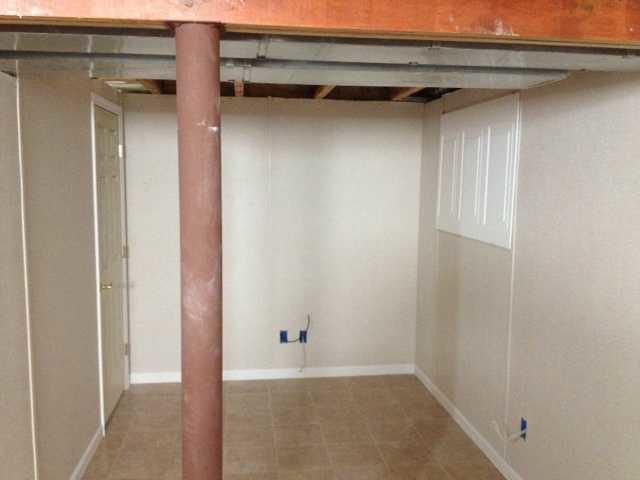
The situations described here are composites drawn from the types of jobs and decisions we encounter regularly. Names and specific figures are illustrative.
Most basement renovation in Albany, NY conversations start the way this one did — not at a design board, but at a wall with a stain on it. The first call came in late August. The homeowner had a deadline in mind, a 1962 colonial on a quiet street near Buckingham Lake, and a basement that had been sitting half-used for a decade. She was thinking guest room, small office, a place for the grandkids to spread out. What she actually had was drywall going soft along one wall, a furnace humming in the corner, and a space that had never quite been dry.
We walked the perimeter together. She pointed at the wall she wanted to “open up.” We talked about the wall she actually needed to look at first.
Where the walk-through really started
The wet wall was the one closest to the driveway. That is not a coincidence in Albany. Driveways pitched the wrong way, gutters that were last cleaned during a different presidency, and a downspout dumping water two feet from the foundation are the three things we see together in older homes here more than any other combination. By the time someone is asking about flooring samples, the foundation has usually been telling its story for years.
Behind the paneling we found exactly what the outside had been hinting at. The bottom plate of the framing was punky. The fiberglass batts that had been stuffed against the concrete were holding water like a sponge and giving it back to the studs all summer. The drywall was dotted with the kind of small dark spots that don’t look like much until you scrape them with a fingernail. None of this is rare. It is the standard finding on a basement that was “finished” in the late seventies and never touched again.
I told her what I tell everyone at this stage: we are not picking paint colors today. We are deciding whether to keep going down the path she was on, or to rewind the project by about three weeks and fix the things that will undo every dollar of finish work if we leave them.
The decision that actually mattered
There was a real tradeoff on the table. She had a budget she had been holding for two years. She could spend it on what she had been imagining — flooring, lights, trim, a small bathroom rough-in — or she could spend a meaningful chunk of it on the boring stuff first and accept a smaller finished footprint at the end. Splitting the difference is what gets people into trouble. Half-measures on water control mean the finishes come out within five years and the whole budget gets spent twice.
She chose the boring stuff. We re-pitched the grade along the driveway side, ran the downspout out to a proper extension that carried water past the foundation, sealed the rim joist with closed-cell foam, replaced the sump pump with a unit that actually matched the pit, and added a battery backup because the power on her block goes out every couple of winters. None of that shows up in photos. All of it is the reason the project still looks good now.
Then we framed.
What changed between the old basement and the new one
The framing rule in an Albany basement is the same as the moisture rule: keep the wood off the concrete and give the wall a thermal break. We used rigid foam tight to the block, then framed an inch off it, then insulated between the studs with mineral wool. Mineral wool does not feed mold the way fiberglass does if there is ever a small leak again, and there is almost always a small leak again — that is just being honest about basements here.
For the floor, she had her heart set on luxury vinyl plank, which was fine. We added a dimpled membrane underneath so the LVP was not sitting directly on cool concrete. That single layer is the difference between a floor that feels right in February and a floor that always feels a little damp under sock feet.
The ceiling stayed exposed and painted out — black, not white, which makes the space read taller without dropping a soffit. She had been quoted a full drop ceiling somewhere else. We talked about why a drop ceiling in a 1962 basement is usually a maintenance trap: it hides the things you most need access to, and it shaves headroom in a space that was already short.
The questions she kept circling back to
Most homeowners ask me three things at this point in a project. The first is some version of: do I need a permit for this? In the City of Albany, anything involving new framing, new wiring, plumbing rough-in, or an egress change does. A pure cosmetic refresh — paint, trim, a new floor over an existing one — usually does not.
The second question is about cost. The honest answer for a real renovation, not a paint job called a renovation, is that finishing a basement properly in this market lands somewhere between thirty and eighty thousand dollars, depending heavily on whether plumbing is involved, whether the space needs a real egress window cut into the foundation, and how much remediation the moisture story demands before finishes can start.
The third question is whether any of this pays back. In the Capital Region, a finished basement does not appraise dollar-for-dollar with the upstairs square footage. What it does, reliably, is make the house show better and sell faster when the time comes.
Where the project nearly went sideways
The closest the job came to trouble was the week we opened the wall along the chimney chase. There was an old gas line that had been abandoned in place — capped, but capped poorly. That is not a handyman fix. We stopped, called a licensed plumber who handles gas work, had the line properly removed and the penetration sealed, and lost two days. Two days is fine. Finding it after the drywall went up would not have been fine.
That is the thing about basement renovations that homeowners do not always see going in: the value of the trade is not in any single skill. It is in knowing when to keep going and when to stop and bring someone in.
What she has now, and what she would change
She has a roughly four-hundred-square-foot finished space with a guest area, a small workspace tucked under the stair, a quiet half bath, and a utility area that still breathes. The wall that started this whole conversation is dry and has stayed dry through two springs. The downspout has been cleared once. The sump has cycled hard during exactly one storm and the backup never had to engage.
The thing she said she would change, if she did it again, was waiting as long as she did. The wet wall had been wet for years before she called anyone. By the time we opened it up, the bottom plate had to be replaced rather than dried out. Waiting did not save her money. It cost her about three thousand dollars in framing repair that could have been avoided with a downspout extension at the right time.
If you want a sense of how other local jobs have come together, the previous projects we have documented show a similar pattern across older Capital Region homes — water first, then structure, then finishes. The same approach is what runs through almost every basement renovation walkthrough we have written about on this site.
What I would want the next homeowner to take from this
If your basement smells musty in late spring, if there is a wall that stains every March, if the carpet by one corner is always a shade darker than the rest, the renovation has already started — you just have not been invited to it yet. The right move is not to keep the lid on. It is to look at the wall, the gutter, and the grade in that order, before you look at a flooring sample.
A basement renovation in Albany, NY that is going to last starts the way the one near Buckingham Lake did — with somebody pointing at a stain and asking what is actually behind it, and somebody else being willing to answer honestly before any drywall goes up. If you are working through that conversation yourself, you can find a way to reach us here, and the reviews from past Capital Region clients are a fair place to read how those conversations have gone for other homeowners.
