
How Do I Install Drywall Shelves Myself? A DIY Guide
Summary
- Confirm wall type first: drywall, plaster over lath, or masonry
- Pick anchors for the real load, not the package photo
- Plan shelf materials by weight, span, and finish needs
- Mark studs and utilities before drilling any holes
- Use a step-by-step workflow to avoid rework and weak mounts
How Do I Install Drywall Shelves Myself? A DIY Guide from home handyman services in latham new york
Introduction
In Latham, Albany, and the surrounding Capital Region, shelf projects succeed or fail based on wall conditions and loading realities—more than on the shelf style you pick. We see this firsthand after four decades working in homes ranging from 1920s bungalows off Route 2 to newer builds near Albany-Shaker. The same “floating shelf” hardware behaves differently in a 5/8-inch fire-rated partition than it does in a plaster-over-lath wall with furring strips.
This guide explains how to evaluate your walls, choose anchors, select economical shelf materials, and follow an installation workflow that holds up through Upstate New York’s seasonal humidity swings. If you later decide to hand the work off, local options for home handyman services in latham are available—but the steps below will let many homeowners complete a safe, long-lasting install on their own.
Before-you-begin checklist for Latham homeowners
- Identify wall type: drywall (1/2 or 5/8), plaster over lath, or drywall over masonry.
- Locate studs with a stud finder and confirm with a small finish nail test in an inconspicuous spot.
- Scan for utilities: use a non-contact voltage tester and note plumbing chases near bathrooms/kitchens.
- Set intended load: decorative items (under 20 lb), pantry use (20–50 lb), books/records (50+ lb).
- Measure shelf span and plan at least one fastener into a stud where possible.
- Confirm moisture risks: exterior walls in older Albany homes can have condensation; bathrooms need ventilation.
- Gather PPE: safety glasses, dust mask/respirator, and hearing protection.
Why shelf installation differs in older Capital Region homes
Local housing stock varies by neighborhood. In older parts of Albany and Colonie, many interior partitions are plaster over wood lath. Some mid-century homes use a thin drywall “blueboard” under veneer plaster. We also encounter furring strips over masonry foundation walls in basements finished during the 1980s–1990s.
- Plaster over lath: Hard surface but brittle. Standard plastic anchors can spin out. Toggle bolts or molly bolts perform better. Drilling must start with a smaller pilot to avoid cracking.
- Thicker assemblies: Fire-rated 5/8-inch drywall is common in garages and some multi-family walls. Anchors must match material thickness to flare correctly.
- True-dimension studs: Older 2x framing can be 1-3/4 to 2 inches thick. Stud finders may misread. Confirm with a finish nail or small pilot hole.
- Furring on masonry: A 3/4-inch air gap behind drywall changes anchor selection. Long toggles may bottom out; masonry anchors might be better if you hit block.
Material choices and cost comparison
Material choice affects weight capacity, ease of finishing, and price. Below are typical retail ranges we see around the Capital Region. Costs vary by finish grade.
| Material | Typical Use | Pros | Cons | Approx. Cost per linear ft (8–10 in deep) |
|---|---|---|---|---|
| Solid wood (poplar, maple) | Visible shelves, paint/stain | Durable, good for routing/edge profiles | Higher cost, wood movement | $8–$20 |
| Cabinet-grade plywood (3/4″ birch) | Painted shelves, hybrid built-ins | Stable, strong, economical | Edge-banding needed for clean look | $5–$12 |
| Laminate/MDF | Budget floating shelves | Low cost, smooth finish | Weaker in long spans, moisture sensitive | $3–$8 |
For most drywall shelf projects in Latham, 3/4-inch plywood with edge-banding balances cost, rigidity, and finish quality. Solid wood is preferred for visible stain-grade installations, especially in living rooms and dining areas.
Anchor types and realistic load limits in Upstate NY walls
Manufacturer load ratings are lab numbers. Real-world loads decline if walls are uneven, plaster is brittle, or fasteners aren’t perfectly set. The ranges below reflect typical outcomes we see across Albany-area homes when installed correctly:
| Anchor Type | Works In | Realistic Shelf Load (per anchor) | Notes |
|---|---|---|---|
| Plastic expansion | 1/2-inch drywall | 10–15 lb | Decorative items only; weak in plaster |
| Self-drilling metal (zip) | Drywall | 15–25 lb | Quicker install; avoid over-torque |
| Molly bolt | Drywall, plaster | 25–50 lb | Good for older plaster; set carefully |
| Toggle bolt (spring) | Drywall, plaster over lath | 40–100 lb | Needs larger hole; great for heavy shelves |
| Into wood stud | Any wall type | 75–150+ lb | Use two or more 2.5–3 inch wood screws |
Load ratings increase when multiple fasteners share the load and when brackets support from below. Floating shelf rods rely heavily on precise drilling and solid wall structure.
Drill-mount vs adhesive-mount shelves
Drill-mount shelves
- Best for: Books, pantry storage, garages, laundry rooms
- Pros: Highest capacity; adaptable anchor choice; reliable in older plaster
- Cons: Wall repair needed if relocated
Adhesive-mount shelves
- Best for: Lightweight decor under 5–8 lb, rental-friendly applications
- Pros: Fast install; minimal holes (or none)
- Cons: Sensitive to paint quality, humidity swings, and textured walls; risky on plaster with dusty paint layers
In Capital Region homes, adhesive-only solutions are inconsistent because painted surfaces often have multiple layers, minor latex chalking, or cold-wall condensation in winter. Use adhesives only for very light loads and expect to re-mount over time.
Common wall surprises in Latham and Albany houses
- Multiple layers: Painted wallpaper under latex topcoats can peel under adhesive loads.
- Plaster keys: In lath walls, drilling too aggressively breaks plaster keys behind the lath and weakens the area.
- Utilities: Vertical pipe runs often flank bathroom walls; kitchens can hide wiring for over-cabinet lighting.
- Furring on block: Finished basements may have a thin drywall layer over masonry—some anchors will bottom out unexpectedly.
- HVAC ducts: Exterior walls with supply or return chases can confuse stud finders; verify with small pilot tests.
Safety precautions based on local housing stock
- Lead paint caution: Homes built before 1978 may have lead-based layers. Avoid dry sanding. Use a mask, contain dust, and clean thoroughly.
- Electrical safety: Use a non-contact voltage tester before drilling. Turn off the circuit if you’re near switches or outlets.
- Plaster dust: Wear eye and respiratory protection; plaster dust is fine and lingers.
- Ladders: On old hardwood floors, use a ladder with non-marring feet to avoid slipping.
- Winter conditions: In cold months, let materials acclimate indoors 24 hours before install to reduce movement and adhesive failure.
DIY difficulty breakdown
| Project Type | Skill Level | Time (per shelf) | Main Risks |
|---|---|---|---|
| Bracketed shelf into studs | Beginner | 45–90 minutes | Finding studs; level alignment |
| Bracketed shelf with toggles | Beginner–Intermediate | 60–120 minutes | Over-drilling; anchor alignment |
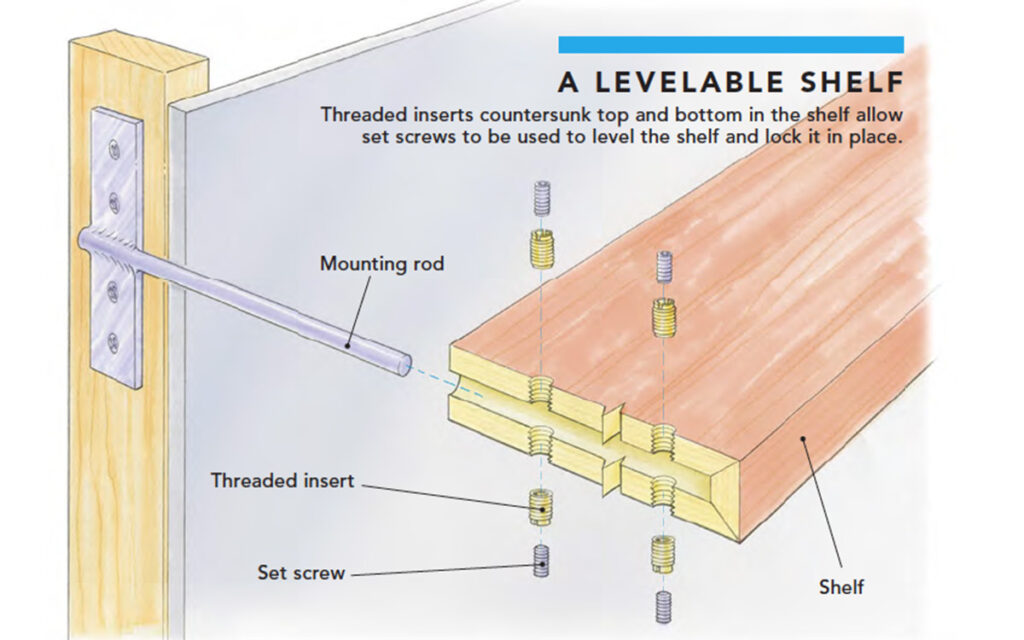
| Floating shelf (rod system) | Intermediate | 90–180 minutes | Precise drilling; hidden bracket alignment |
| Built-in alcove shelves (drywall returns) | Intermediate–Advanced | Half to full day | Framing, finishing, paint matching |
Tool and material cost scenarios
| Scenario | What’s Included | Estimated Cost |
|---|---|---|
| Single bracketed shelf (30–36 in) | 2 brackets, plywood shelf, paint, screws into studs | $35–$70 |
| Two floating shelves (24–30 in) | Floating hardware, solid/plywood shelf boards, toggles | $80–$160 |
| Three-shelf pantry section (stud+toggle mix) | 3 shelves, 4–6 brackets, mixed anchors, finish | $120–$250 |
| Basement wall over masonry (furring present) | Heavy-duty toggles or masonry anchors, treated lumber cleat | $60–$140 |
Prices reflect typical retail around the Capital Region and DIY paint/finish materials. Tool purchases (stud finder, level, drill bits) may add $40–$150 if you don’t own them.
A full, step-by-step installation workflow
- Map the wall: Mark out intended shelf height and length with painter’s tape. Verify clearances to doors, windows, and switches.
- Find structure: Locate studs. Confirm with a small pilot hole at shelf height. If no stud aligns, plan for toggles or a ledger cleat.
- Select hardware: Choose anchors from the table above based on wall type and load. For mixed walls, consider a bracket into a stud on one side and a toggle on the other.
- Pre-finish the shelf: Sand, prime, and paint or stain before mounting. It’s easier and cleaner.
- Lay out bracket holes: Use a level to draw a horizontal line for bracket tops or floating-rod centers. Pre-drill pilot holes at exact spacing.
- Install anchors: For mollys, drill to the specified size and set them flush; for toggles, drill the larger hole and keep the toggle snug as you tighten.
- Mount brackets or floating hardware: Check level after snugging each screw. Do not over-tighten in plaster.
- Set the shelf: Place the shelf, check for level, and secure with short screws from below if brackets allow. Avoid penetrating the shelf face.
- Load test progressively: Start with 25% of intended load. Observe for deflection or anchor movement. Increase to full load over 24 hours.
- Finish details: Touch up paint around brackets, add edge-banding irons for plywood, and caulk small gaps if doing built-ins.
Shelving failure risks with insulation or moisture
- Exterior walls: Dense-pack cellulose behind older plaster can crumble if you over-drill. Use sharp bits and light pressure.
- Moist basements: Humidity and occasional dampness weaken paper-faced drywall and MDF. Prefer moisture-resistant boards and mechanical fasteners into studs or masonry.
- Bathroom walls: Steam softens some adhesives and can swell MDF edges. Seal all cut edges and use anchors rated for wet areas.
- Seasonal movement: Winter dryness in Upstate NY can shrink wood shelves; summer humidity can swell them. Leave slight expansion gaps and avoid tight alcove friction fits.
When DIY works—and when to get help
DIY is reasonable when
- You can hit at least one stud with each shelf bracket.
- Loads are light to medium (decor, pantry items, short runs of books).
- Walls are standard 1/2-inch drywall with no utilities in the way.
Consider help when
- Walls are plaster over lath and loads exceed 40–50 lb per shelf.
- You’re mounting on finished masonry or tile, or spanning studs more than 32 inches apart.
- You need built-in alcoves with drywall finishing and paint matching.
For broader storage planning beyond a single shelf—such as mudroom cubbies, garage wall systems, or closet reconfiguration—review practical options in this overview of garage and closet storage upgrades. For mixed-scope projects that combine drywall repair, trim, and carpentry, this regional page on handyman drywall and carpentry services outlines typical workflows and constraints in the Clifton Park–Albany corridor.
If you pivot from DIY, experienced home handyman services in latham handle heavy loads, plaster repairs, and multi-shelf layouts with the right anchors and finishing steps.
How installed shelves affect home function and value
Well-mounted shelves improve day-to-day function—especially in kitchens, laundry rooms, and entryways common to Latham colonials and split-levels. For resale, neat storage and clean finishes present better in listing photos and showings. Value gains are modest alone but become meaningful when shelves are part of a coherent storage plan (pantry zones, mudroom drop zones, and garage organization). Avoid overloaded floating shelves with visible sag; buyers tend to notice deflection and patchy paint.
FAQs
How long should a drywall-mounted shelf span without sagging?
For 3/4-inch plywood or solid wood, limit unsupported spans to 24–32 inches for book loads. Heavier loads need more brackets or a thicker shelf. MDF should be kept shorter (18–24 inches) unless you add a front stiffener.
Is it better to mount into studs or use toggles?
Studs are best when you can align brackets cleanly. If layout or aesthetics require centered placement away from studs, toggles and mollys can hold well when installed correctly. Many Albany-area projects use a mix: at least one side into a stud, the other side with a high-quality toggle.
Will shelves add resale value in the Capital Region?
Individually, small shelves have limited impact. As part of organized spaces—pantries, laundry rooms, or built-ins—they support buyer perception. Quality of install (level, no sag, clean caulk lines) matters more than shelf count.
What finish holds up best in humid bathrooms?
Use moisture-resistant primer and semi-gloss or satin enamel on shelves, and seal all edges. Solid wood or plywood handles moisture better than raw MDF. Anchor into studs or use toggles with stainless or coated screws to limit corrosion.
Why do search results show phrases like “handyman near me”?
Search engines map location intent to local providers. Many homeowners type informal phrases such as “handyman near me,” then receive Latham- and Albany-area results. It’s simply how the system connects local demand with nearby services.
Conclusion
In Latham and across Albany’s neighborhoods, drywall shelf success comes from matching the anchor system to the wall you actually have, not the one you expect. With careful mapping for studs and utilities, realistic load planning, and patient installation, most homeowners can complete sturdy bracketed or floating shelves. Older plaster walls demand more care but perform reliably with toggles or mollys. When the scope grows into built-ins, heavy loads, or mixed wall types, leaning on regional expertise can keep the finish consistent and the hardware correctly engineered. For typical Capital Region homes, a steady, methodical approach prevents rework and helps shelves stay level through the seasons.
