
What Does It Take to Get Handrail Installation in Albany, NY Right?
The situations described here are composites drawn from the types of jobs and decisions we encounter regularly. Names and specific figures are illustrative.
Most calls about handrail installation in Albany, NY start the same way. A homeowner notices movement they had been ignoring all winter, and the timing is suddenly tight. This one came in on a Tuesday morning in late March, the first week the snow had let go of the north side of the porch. A homeowner in Pine Hills said the railing on her front steps had been wobbling for months, and now that the ground had thawed she could feel one of the bottom posts shift when she leaned on it. She had a buyer coming through in six weeks and did not want a wobble showing up on an inspection report.
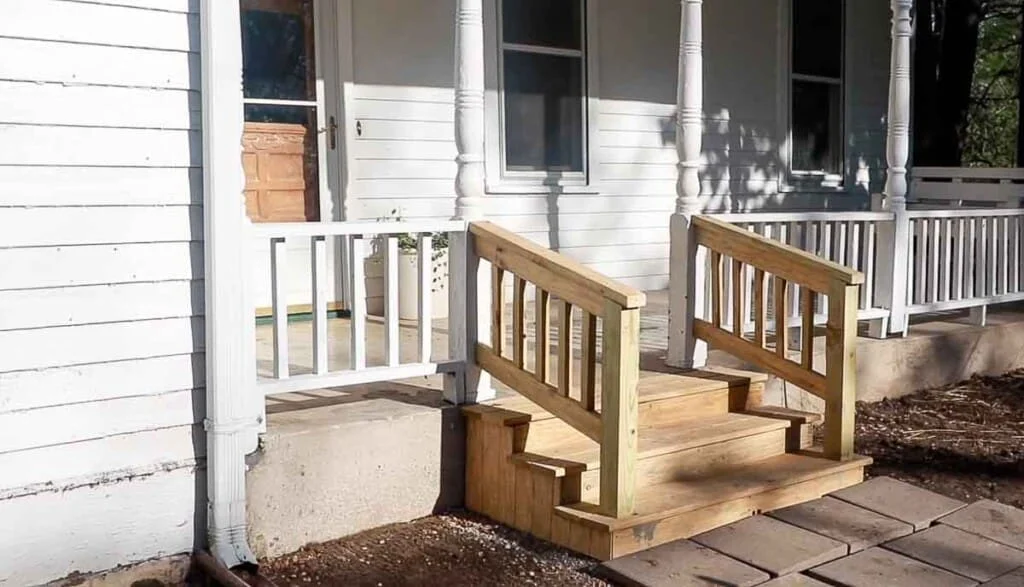
The house was a 1920s two-story with a covered front porch, four wooden risers, a continuous top rail, and turned balusters that had been repainted enough times to fill in some of the detail. From the street it looked fine. From the second step it told a different story.
What the post had been hiding
The newel post at the bottom of the run was the giveaway. When I gripped the top of it and pulled toward me, the whole post tipped roughly half an inch before catching. The base looked solid against the concrete pad, but that was because someone had wrapped a trim collar around it years ago. Underneath the collar, the post had rotted from the inside out. Water had worked its way down end grain that was never sealed, sat in the cavity behind the trim, and frozen and thawed there every winter for who knows how long. The post was a shell. The collar was holding it more or less upright, and the fasteners were grabbing wet pulp instead of wood.
This is the pattern we see again and again on porches in older Albany neighborhoods. The Capital Region puts a hundred or more freeze-thaw cycles on exterior wood every year. Anywhere water finds a way in and cannot get back out, the wood does not survive a decade of that. Posts wrapped in trim are the worst offenders, but balusters set into pockets, treads that meet stringers without a gap, and handrails capped with flat boards instead of pitched ones all collect water the same way. By the time the homeowner can feel movement, the structural piece is usually further gone than they expect.
The conversation about whether to patch it
She asked the question almost every homeowner asks at this point, and I do not blame anyone for asking it. Could we just tighten what was there. Sister a piece of pressure-treated to the rotted post, run some longer lag screws into the porch framing, set the rail back to height, and call it done before the buyer walked through. That kind of patch is real. It exists. On a porch with two risers and no real drop, it is sometimes the right call.
On her porch it was not. The walking surface sat about thirty-four inches above grade at the front, which puts the guard requirement in play, and the rail was not at code height to begin with. A patch would have left her with a railing that felt solid for a season or two, would not have addressed the rot inside the second post (which I had not even checked yet), and would have shown up on an inspection report as a deferred-maintenance flag whether or not it failed a pull test on the day. The buyer would have asked for a credit. The credit would have been more than the proper fix.
The other thing I told her, which I tell most people facing this decision, is that the moment you have to remove the rail to get at the post, you are already most of the way into a rebuild. The labor that scares people about replacement is the same labor a serious patch costs.
What we ended up doing
We pulled the rail. The second newel had rot through about a third of its cross-section. The two intermediate balusters at the bottom of the run were soft. The top rail itself was still in decent shape, which surprised me, but the connections at both ends were not. The decision became straightforward once everything was open: new posts, new bottom-rail assembly, salvage the top rail and most of the balusters, reset everything to current code height, and through-bolt the posts into the porch framing with structural screws and hidden blocking instead of surface-mounting them.
The bottom-of-stair newel got set into a metal post anchor that lifted the end grain off the concrete by about an inch, with a sloped cap to shed water. That is the detail that buys the next homeowner another twenty years if they keep up with sealing. End grain that sits on or near concrete in this climate is the single most reliable way to start the rot cycle over.
We sealed every cut end with oil-based primer before assembly. Pre-drilled near the ends of every board. Used stainless fasteners through the posts and exterior-grade structural screws into the framing. The whole job took a day and a half, including a return trip the next morning for the topcoat once the primer had set overnight. While we were there we tightened a loose bracket on her downspout that had been dumping runoff onto the bottom step, which is probably what started the rot at that post in the first place. If she had not fixed the water path, the new post would have started failing on the same timeline.
Where the cost actually landed
Most homeowners want a ballpark before they commit to opening the rail up. I told her what I tell everyone: a patch on a sound rail is a couple hundred dollars in materials plus an hour or two of labor. A proper rebuild of a four-riser porch rail in 1920s framing, with through-bolted posts and a salvaged top rail, lands somewhere in the range of fifteen hundred to twenty-five hundred dollars depending on materials and what gets discovered when the rail comes off.
Hers came in at the lower end because the top rail and most of the balusters were reusable. If she had waited another two winters, the top rail would not have been. That is the cost curve worth understanding. Wood that is wet inside a paint shell stays viable until it does not, and the day it stops being viable is not announced.
The questions homeowners ask me at this point
By the time we are talking about a porch rail, most people have the same three or four questions queued up. The one I hear first is whether they need a permit. The honest answer is that in the City of Albany, structural rail and step rebuilds usually do require one, and cosmetic work like baluster swaps or a fresh coat of paint usually does not. The line gets drawn at whether you are changing the structural connection or the load path. If you are pulling posts and reframing, you are in permit territory. The building department is reasonable about this if you call before you start.
The second question is whether composite or vinyl rail systems hold up in Upstate winters. They do, when they are installed with proper blocking and the manufacturer’s brackets, and when the post anchors are rated for the load. The failure mode we see on composite is almost always installation, not material. Surface-mounted brackets into a deck board with deck screws will loosen. Through-bolted posts with hidden blocking inside the porch framing will not.
The third question, usually quieter, is whether the rail really needs to be at thirty-four inches when the existing one has been at thirty-one inches for ninety years. The answer is that grandfathered heights do not protect you from inspection findings during a sale or from liability if someone falls. If we are already in the rail, we set it to current code. The cost difference at that point is zero.
The last question is whether the work will look right on a historic house. We pulled a profile sample from one of the original balusters before we ordered replacements, matched the turning at a local mill, and reused enough of the original balusters that the run reads as continuous. From the sidewalk it looks like nothing happened, which is what you want on a porch like that. For homeowners thinking about the broader picture on an older home, our guide on common door and window problems in older Albany homes covers the same kind of decisions, and the writeup on electrical and lighting fixes a handyman can do legally in NY is worth a read if step lighting is part of what you are trying to fix.
What changed for the homeowner
The buyer walked through three weeks later. The inspection report mentioned the railing as recently rebuilt and code compliant. The sale closed without a porch-related credit. She told us afterward that the part she had not expected was how solid the rail felt to lean on. She had gotten used to the wobble. New porch rails feel different in the hand than rails that have been moving for a decade, and you do not notice the old movement until it is gone.
What we took from the job is the same thing we take from most porch jobs in older Albany neighborhoods. The problem the homeowner reports is rarely the whole problem. The rail moves because the post is gone. The post is gone because water sat behind a trim collar for fifteen winters. The water sat there because a downspout was aimed at the wrong place. None of those things can be fixed in isolation if you want the repair to last through the next decade of freeze cycles. You can see the kind of work we have done on similar projects on our previous projects page, and if you want a sense of how other Capital Region homeowners describe the experience, the reviews page covers a fair cross-section of what we hear back.
If your porch rail moves when you lean on it, the job is not the rail. The job is figuring out what is going on behind the rail before the next thaw. A good visit usually starts with looking, not with a quote. For homeowners in Albany, Cohoes, Clifton Park, or the broader Capital Region thinking about handrail installation in Albany, NY, the most useful first step is a walk-through of what is actually loose, what is actually rotting, and what the water path looks like. The repair plan tends to write itself from there.

https://shorturl.fm/nCL3O
https://shorturl.fm/yWYQh
https://shorturl.fm/uq2CP
https://shorturl.fm/KHlud
https://shorturl.fm/UG0Wt